

GIULIO ROSSO
-
- Fresco of the Dress Choice
-
- Games (1935)
-
- Mosaic of the Black Man – Rome
-
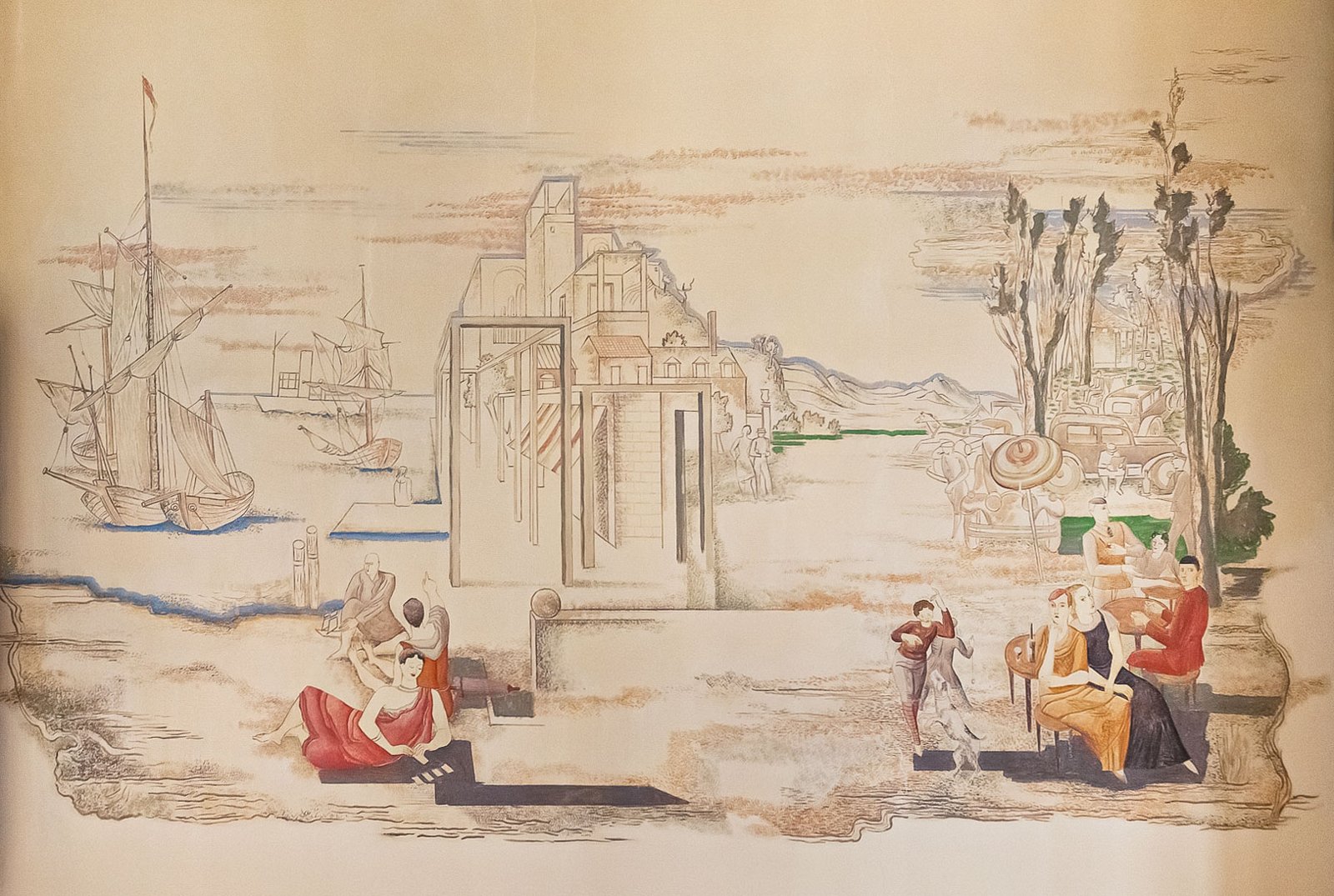
- Fresco in the Dinner room
-
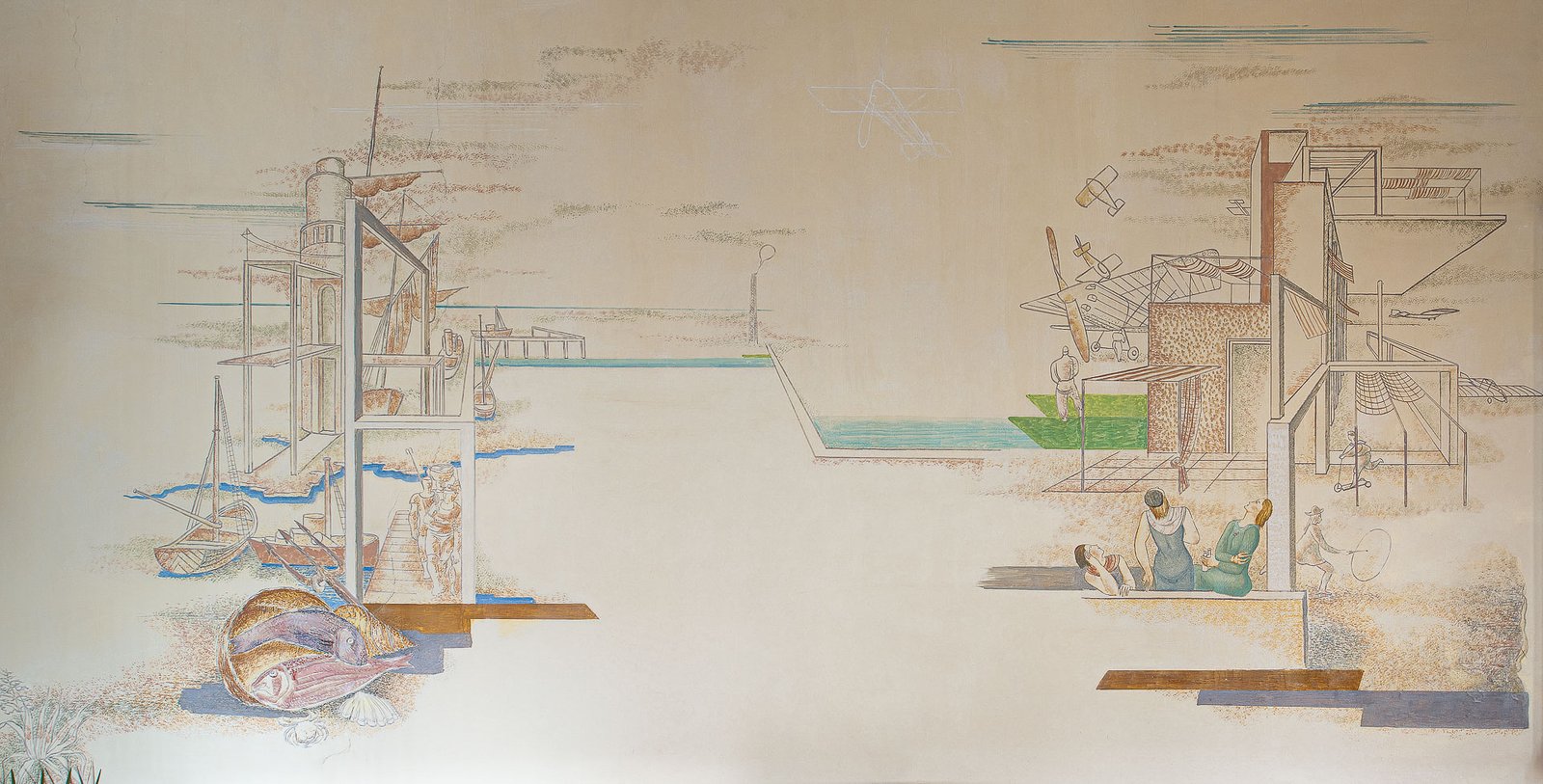
- Fresco in the apartment’s Dinner room
-
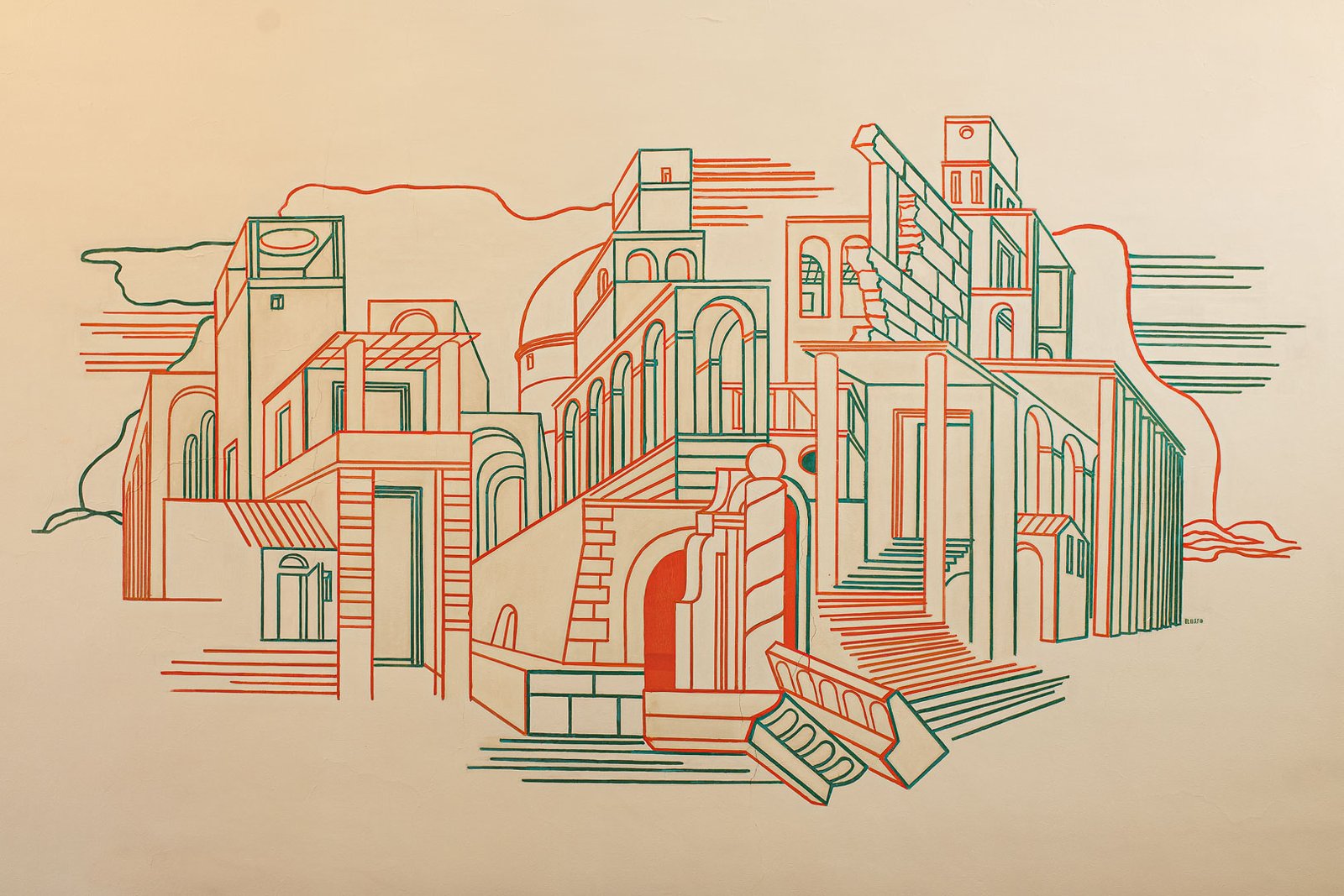
- Fresco in the Apartment’s gallery
-
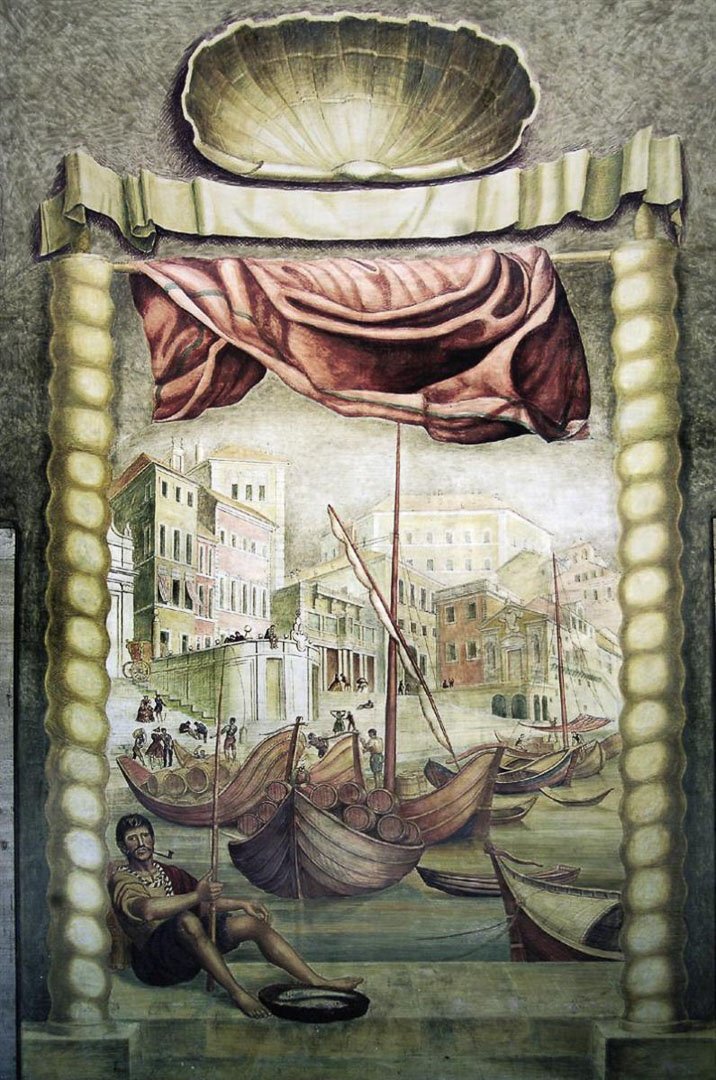
- Fresco in Via di Ripetta – Rome
-
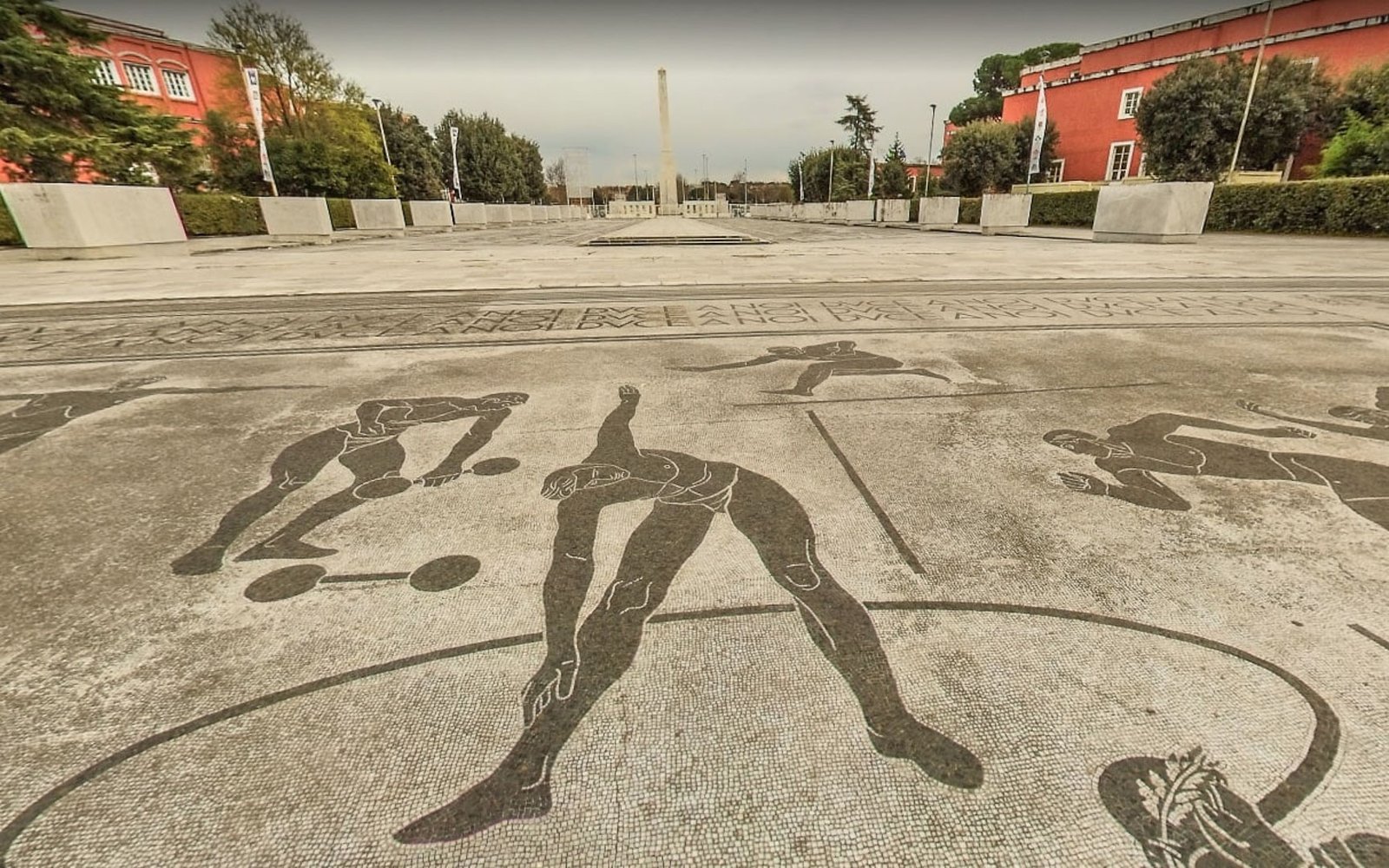
- Olympic Games at the O. Stadium – Rome
-
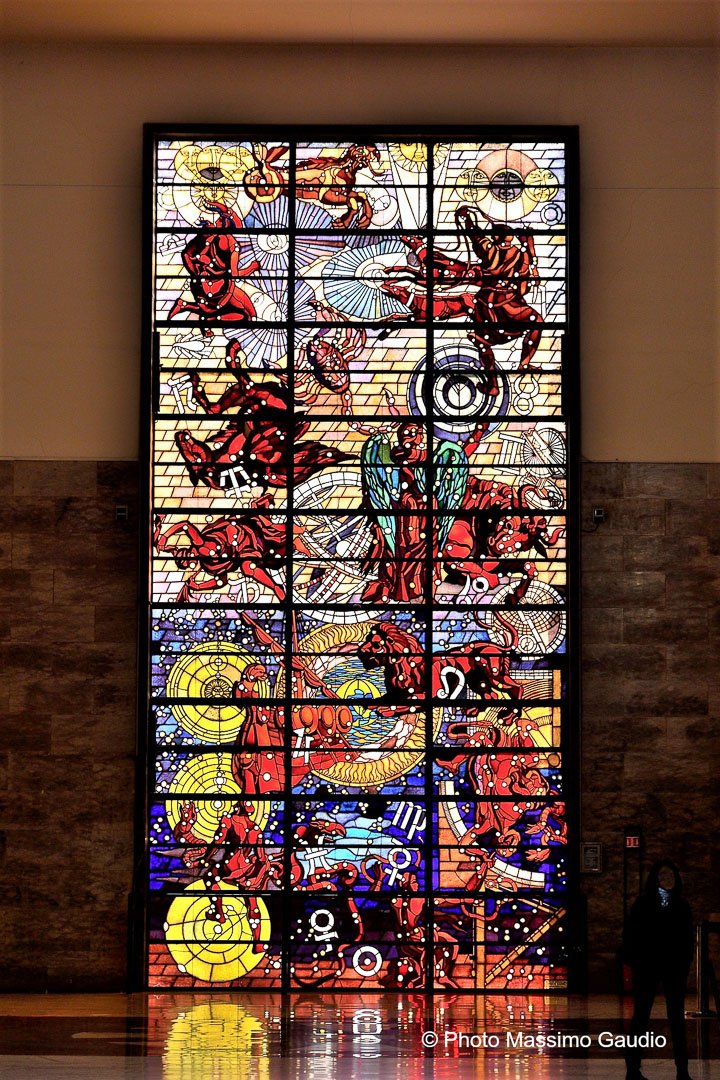
- Polycrome stained glass window – Rome
Italian painter, decorator and illustrator, he moved to Rome from Florence in 1922 initiating an intense collaboration with Marcello Piacentini and Vittorio Morpurgo.
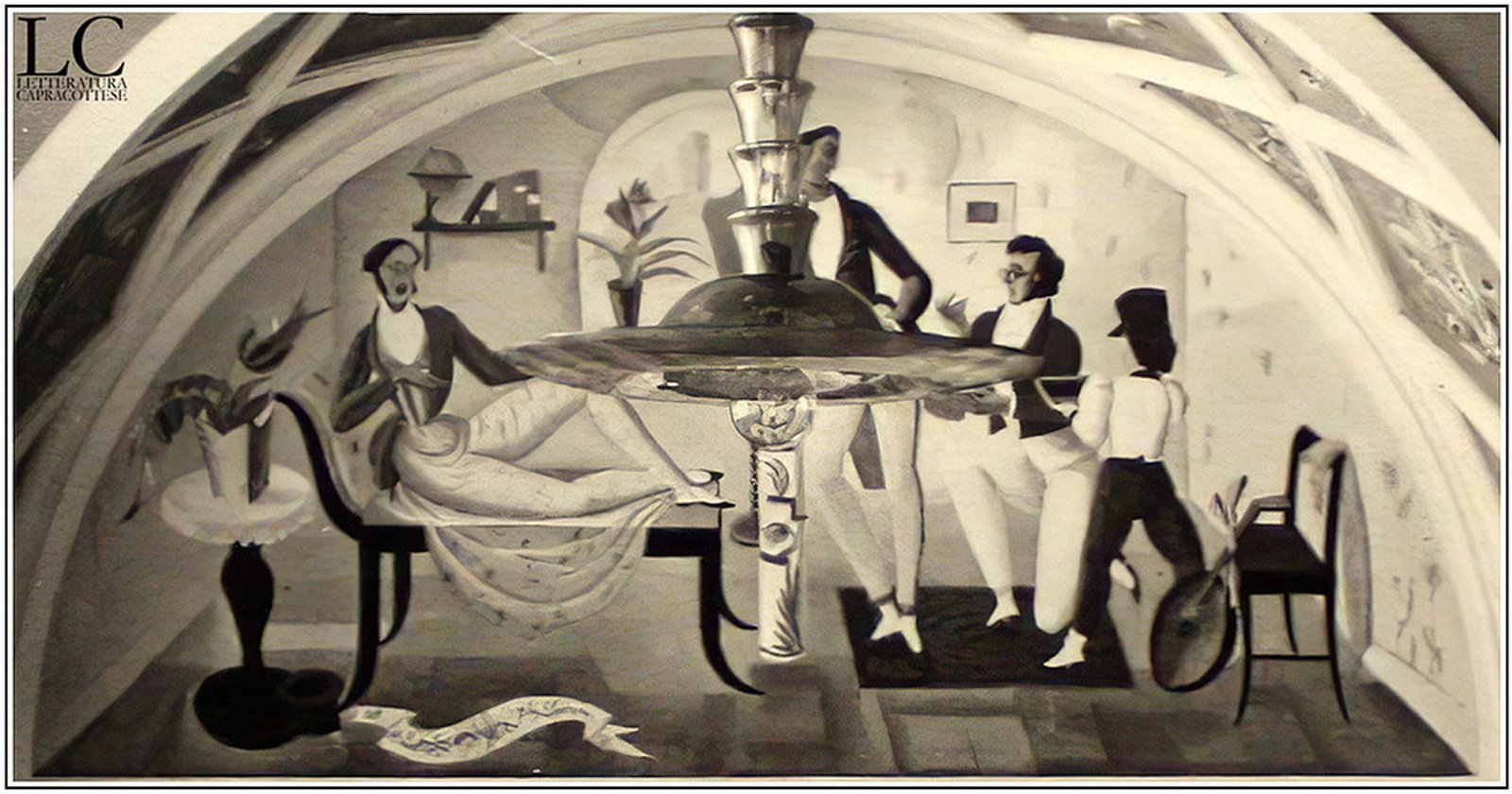
Piacentini commissioned him to decorate the tabarin of the Teatro Savoia in Florence in 1921 and later the Roma-Ostia railway station. In 1922 he decorated the Villa Piacentini in Genzano. These achievements led to other commissions and he decorated public buildings and private houses in Bologna, Rome, Varese and Monza. In 1927, he also decorated several rooms in the Teatro Quirinetta in Rome designed by Piacentini.
Again in 1927 he obtained an important recognition by winning the Pensionato Artistico Nazionale for decoration and from 1927 to 1933 participated in the Monza Biennale III of Decorative Arts (1927) and in several exhibitions including Novecento in Nice (1928), Decorative Arts in Amsterdam (1931) and the Internationale di Arte Sacra in Padua (1931). He participated in the Milan Triennale V (1933) and the first four Rome Quadriennali (1931, 1935, 1939, 1943).
In these years Giulio Rosso contributed to numerous art and architecture magazines: "Domus" published many of his works on decoration in almost all its 1928 issues, as well as "Almanacco degli Artisti", "Emporium" and "La Casa Bella".
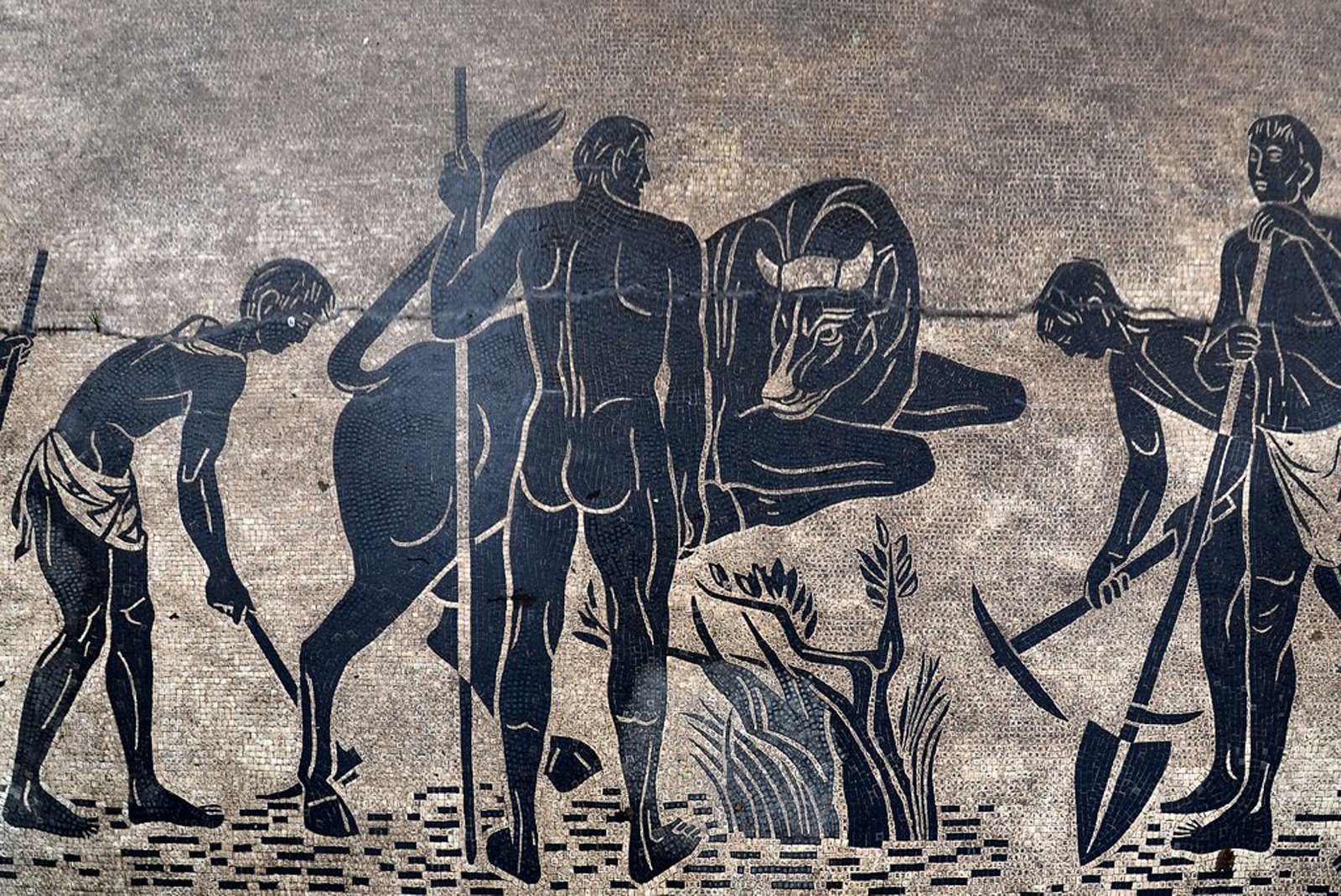
In the 1930s, Rosso became more involved in public works, starting with the large parchment painting (1932) for the Ministero delle Corporazioni in Via Veneto in Rome, now the seat of the Ministry of Economic Development. In 1934-38 he worked on sketches for the black-and-white floor mosaics of the Foro Mussolini (later Foro Italico). He designed the mosaics, made by the School of Mosaicists of Friuli, around the indoor pool and the "hanging" pool in the Palazzo delle Terme, as well as those forming the ring around the fountain of the Sphere and part of those running along the Foro Italico pathway.
In 1937-39 he painted a room in the Palazzo di Giustizia in Milan, designed by Piacentini, with the evangelical theme of the parable of talents.
In 1938-41 he received several assignments for the Esposizione Universale di Roma in 1942. His are the first two mosaic panels that surround the light fountain in front of the Palazzo degli Uffici in Via Ciro il Grande. For the same exhibition, he was also responsible the large polychrome stained-glass window that overlooks the monumental staircase of the entrance to the Palazzo delle Scienze, now home to the Museo Pigorini. The work consists of 54 rectangular panels depicting a complex cosmogony illustrated by planets, zodiac signs, astronomical instruments and Ptolemaic and Copernican conceptions of the universe.
Nella Rome Ostiense railway station, Giulio Rosso and Maria Zaffuto created a mosaic floor with black-and- white ceramic tiles of irregular size. The decorations have historical and mythological themes from the founding of the city of Rome, to the exaltation of the Genio Italico e dell’Impero, up to the Rome of the Popes.
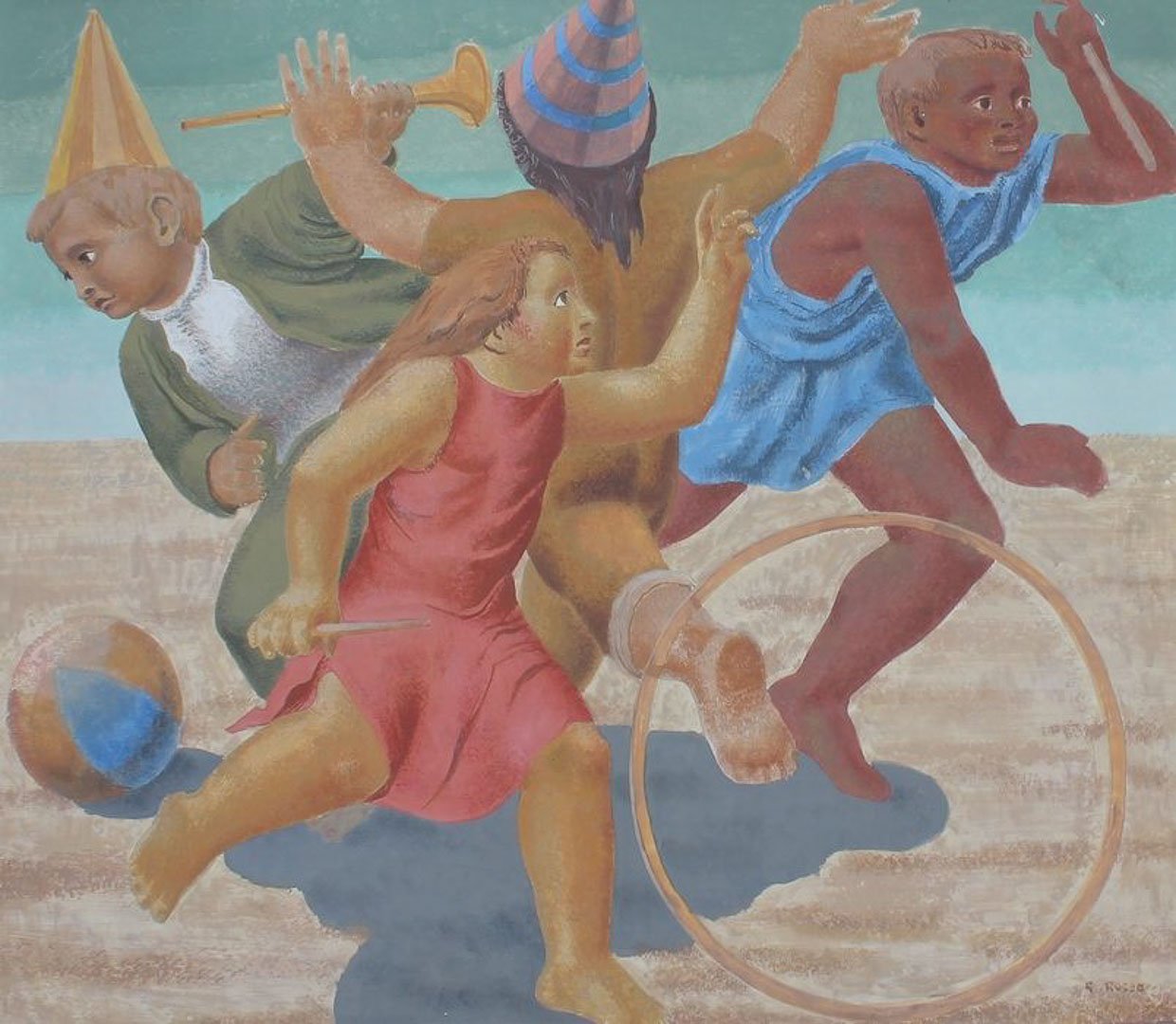
In 1940, as part of Vittorio Morpurgo’s great project, he created for the Palazzo dell'Inps in Rome large frescoes describing animated scenes of everyday life, for which the main city squares act as frames. Another great wall painting, on the theme of work, was made for the headquarters of the Banca Nazionale del Lavoro in Via del Corso in Rome in 1941.
Works by Giulio Rosso are also found in Tripoli, in buildings built during the colonial period.
There are also many works by Giulio Rosso in homes and private places; paintings, but above all pictorial decorations, stained glass, lace and furniture. Because Giulio Rosso declared himself "a painter who hates paintings", feeling himself to be essentially a decorator who considered painting "an adjunct to architecture".
Among the few traces of Rosso as a painter, there are the pictures exhibited in the first Biennale of the Pensionato Artistico (December 1929) and in the Rome Quadriennali.
Giulio Rosso probably died in Brazil in 1976, to where he moved in 1946, continuing his artistic activity of decoration, illustration and painting.
«I like Rosso very much, I greatly enjoy him, he is the Italian decorator of the most intense invention, of the most ornate fantasy, of the most flexible qualities and if I wanted to share this fault, I am in excellent company with Roberto Papini, with Marcello Piacentini, with Antonio Maraini, all red gourmets». (Giò Ponti, Domus, 1928)